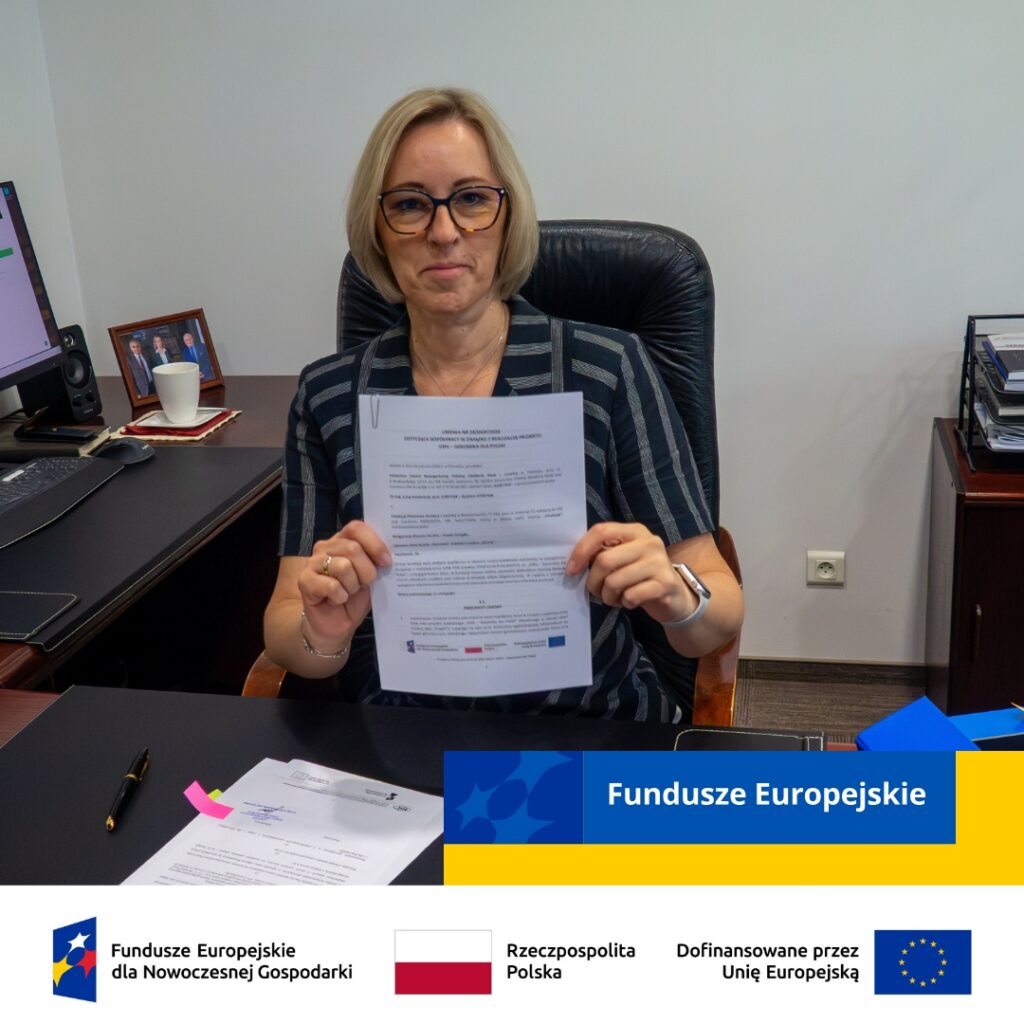
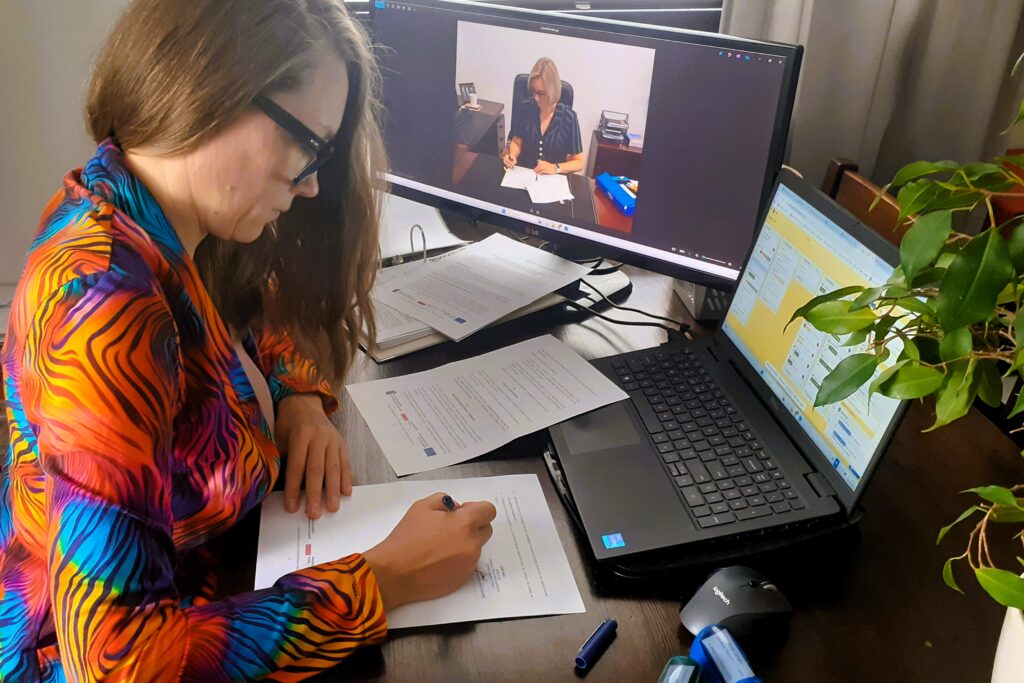
29 czerwca 2026 – The collaboration between the Institute of Bioorganic Chemistry of the Polish Academy of Sciences (IBCH PAS) and the Platinum Team Foundation has now been formalised. The signing of a cooperation agreement in connection with the ‘G4PL – Genomics for Poland’ project, led by IBCH PAS, marks the first step towards joint efforts to research rare genetic diseases and raise awareness of them.
The Platinum Team Foundation brings together and supports the families of patients suffering from rare diseases, with a particular focus on Batten disease. A key element of the Foundation’s mission is to raise public awareness of rare diseases. The importance of this education is highlighted each year by World Batten Disease Day, observed on 9 June. The Foundation’s activities involve not only supporting families, but also helping the wider community to understand the challenges faced by patients and their loved ones.
The collaboration between the two institutions is based on combining social initiatives with research and development activities. The G4PL – Genomics for Poland project aims to compile a dataset comprising the whole-genome sequencing results of 6,000–7,000 people, including patients with rare diseases.
For patients with Batten disease and other rare genetic conditions, obtaining a diagnosis is often a lengthy and arduous process, referred to as a ‘diagnostic odyssey’. Thanks to the infrastructure being developed as part of the G4PL project, access to whole-genome data and tools for analysing it will make it possible to identify the genetic basis of diseases more quickly, which is a prerequisite for implementing appropriate care and treatment.
“I first came into contact with the Platinum Team Foundation several years ago, whilst working on the first genomics project at the Institute of Bioorganic Chemistry of the Polish Academy of Sciences (IBCH)t, the so-called Genomic Map of Poland. At that time, our aim was to compile a reference collection of genomes from the inhabitants of Poland, including representatives of regional and ethnic minorities. Our first meeting took place in Kashubia, whilst collecting samples from the Kashubian minority, to which the Foundation’s Chair, Małgorzata Skweres-Kuchta, belongs. It was then that the suggestion was made to include rare diseases in future research. Today, that future is becoming a reality.” – Dr Luiza Handschuh, Professor at the Institute of Bioorganic Chemistry (IBCH), Director of the Institute of Bioorganic Chemistry, Polish Academy of Sciences
“The code matters – that’s our guiding principle in conversations with families. Genetic testing doesn’t explain the cause of every illness, but for many children suspected of having a rare condition, it can bring their diagnostic odyssey to an end. This is important because, without a diagnosis, we’re groping in the dark; often, we even cause harm through inappropriate treatment. And when a treatment option exists for a particular condition, a swift diagnosis can mean the difference between life and death. I know this from my own experience and from the stories of many families I know. Any initiative that can help reach a diagnosis is invaluable.” – Dr Małgorzata Skweres-Kuchta, Chair of the Platinum Team Foundation