The Human Genome Meeting 2026, an international conference organized by the Human Genome Organization (HUGO), took place in Athens from April 22–24. The conference showcased the latest research findings in human genomics from around the world, including work on the T2T (Telomere-to-Telomere) pangenome (Karen Miga, University of California, Santa Cruz, USA), the genome of Asia (Wan Yue, A*STAR Genome Institute of Singapore), the European genome (Andre Uitterlinden, Erasmus Medical Center, Netherlands), and the links between the genome and the phenotype (Mike Snyder, Stanford University, USA). Strategies and new methods for analyzing genomic data were presented (including John Quackenbush, Harvard University, Harvard School of Public Health, USA).
The importance of genomics for public health (Sonja Rasmussen, Johns Hopkins University, USA), the diagnosis of rare diseases (including Gabriela Repetto, University of Desarrollo, Chile), and research into the underlying causes of psychiatric disorders (including Isidore Rigoutsos, Thomas Jefferson University, USA; and Alessio Squassina, University of Cagliari, Italy) was emphasized. The role of non-coding RNAs in regulating genome structure and activity was discussed by, among others, Magda Bienko from Poland (Karolinska Institutet, Sweden, and Human Technopole, Italy). There was also a presentation on the results of fossil genome research, including new data on Neanderthal and Denisovan remnants in modern human genomes (including Hie Lim Kim, Nanyang Technological University, Singapore).
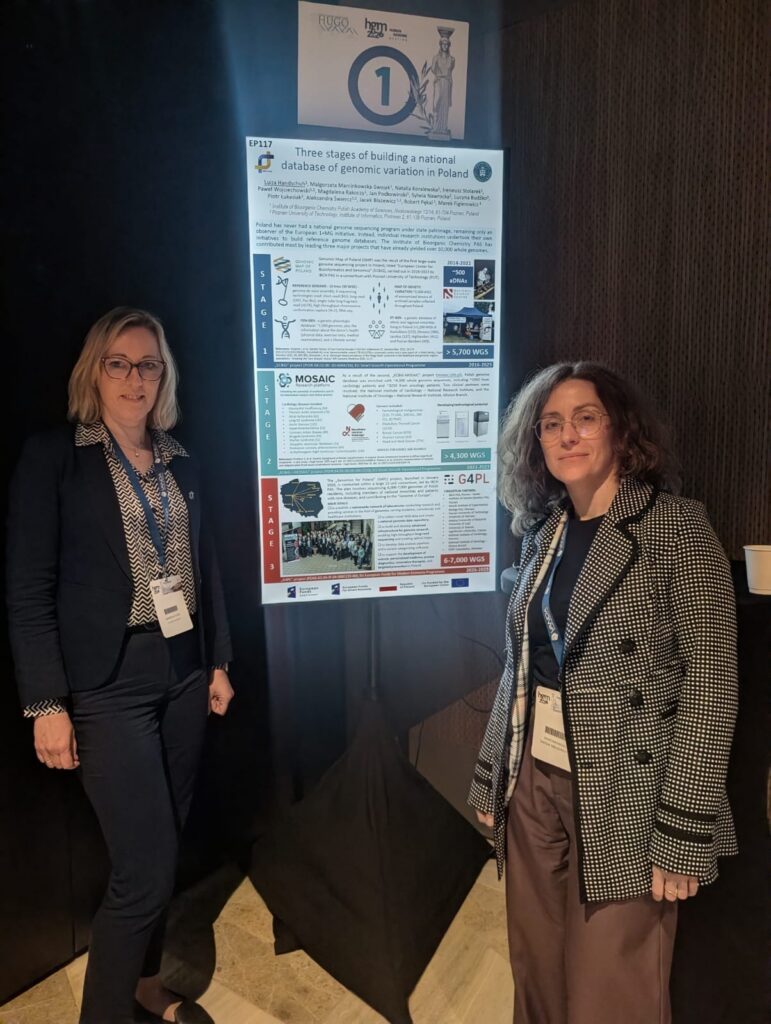
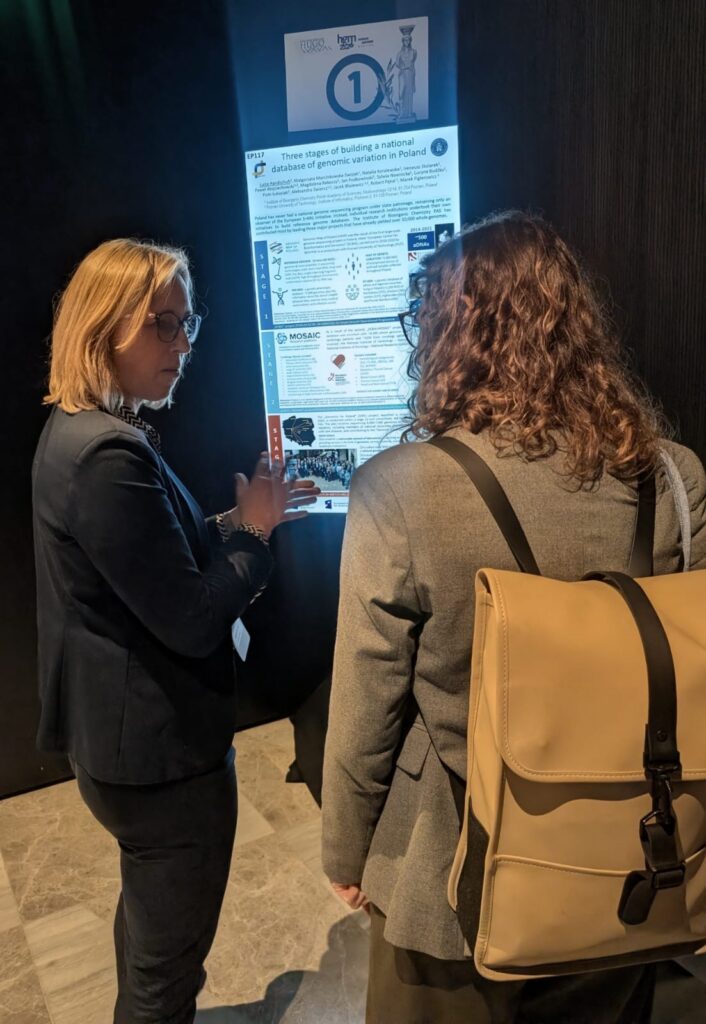
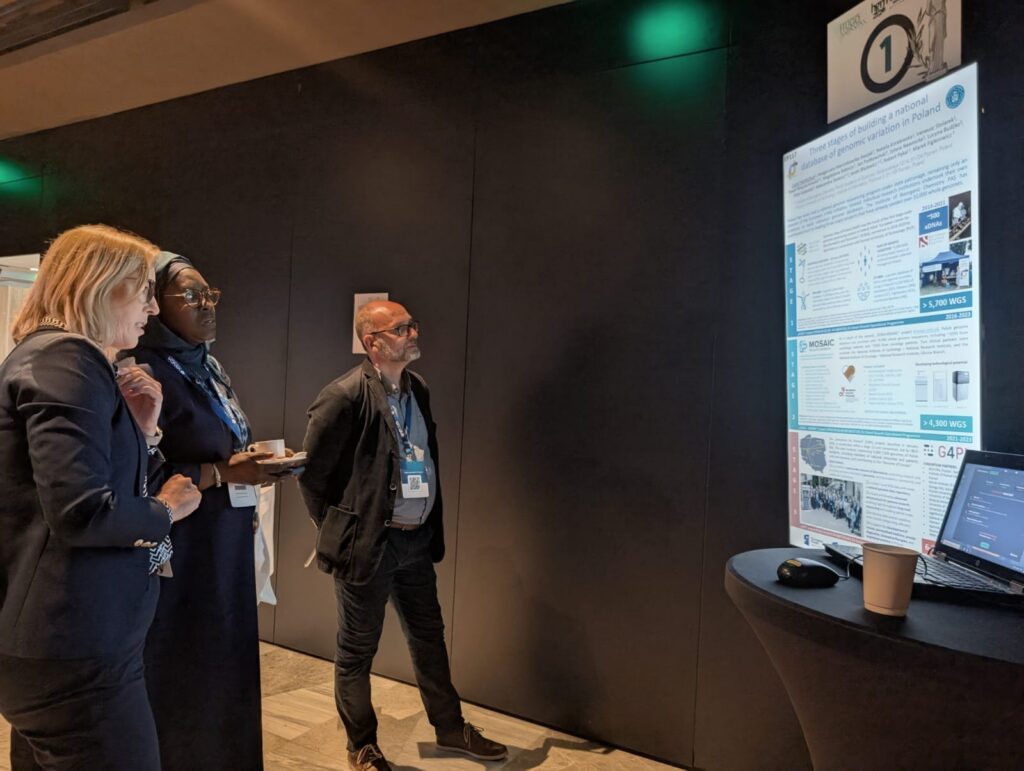
The session on national genomic initiatives featured presentations by representatives from Italy, Greece, Malaysia, Indonesia, Thailand, the United Arab Emirates, India, and China. We presented a poster titled “Three stages of building a national database of genomic variation in Poland” (Three stages of building a national database of genomic variation in Poland), in which the third stage symbolizes the “Genomics for Poland (G4PL)” project. The HUGO African Prize, for pioneering genetic research on the population of Senegal, was awarded to Rokhaya Ndiaye (Cheikh Anta Diop University, Senegal), seen in the photo during a discussion at our poster.
The next Human Genome Meeting will take place March 21–25, 2027, in Abu Dhabi.